Rail Infrastructure
01
1. What is the Rail Infrastructure
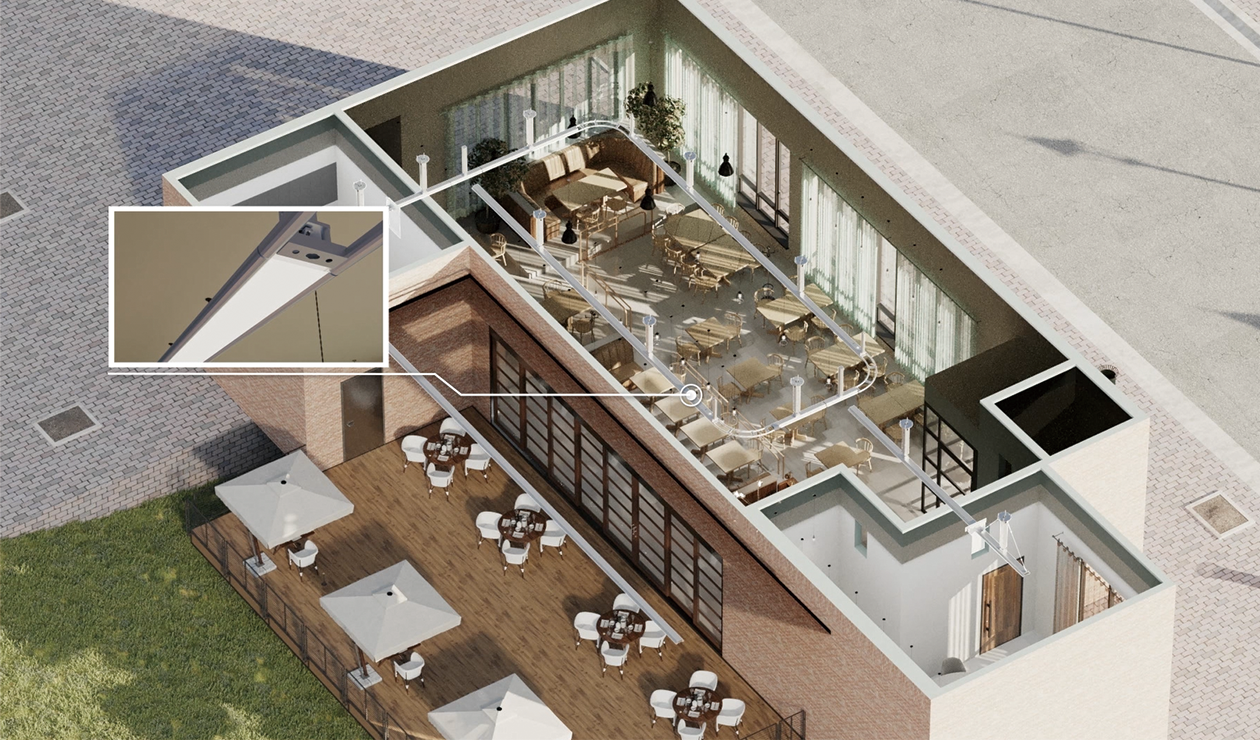
- The rail infrastructure serves as the physical foundation of the Bumblebee platform’s mobility system.
- It is not merely a component that supports a robot, but an installed structure that enables movement.
- Fixed to the ceiling, it forms a continuous mobility path that connects the entire space.
- Once deployed, multiple tasks and functions can be repeatedly utilized on the same infrastructure.
- Even when tasks or use cases change, the rail infrastructure itself remains unchanged.
- This represents a shift from operating robots to building mobility infrastructure.
Point
"It is an installed physical infrastructure that transforms ceiling space into a continuous mobility path."
02
2. Rail Network Architecture
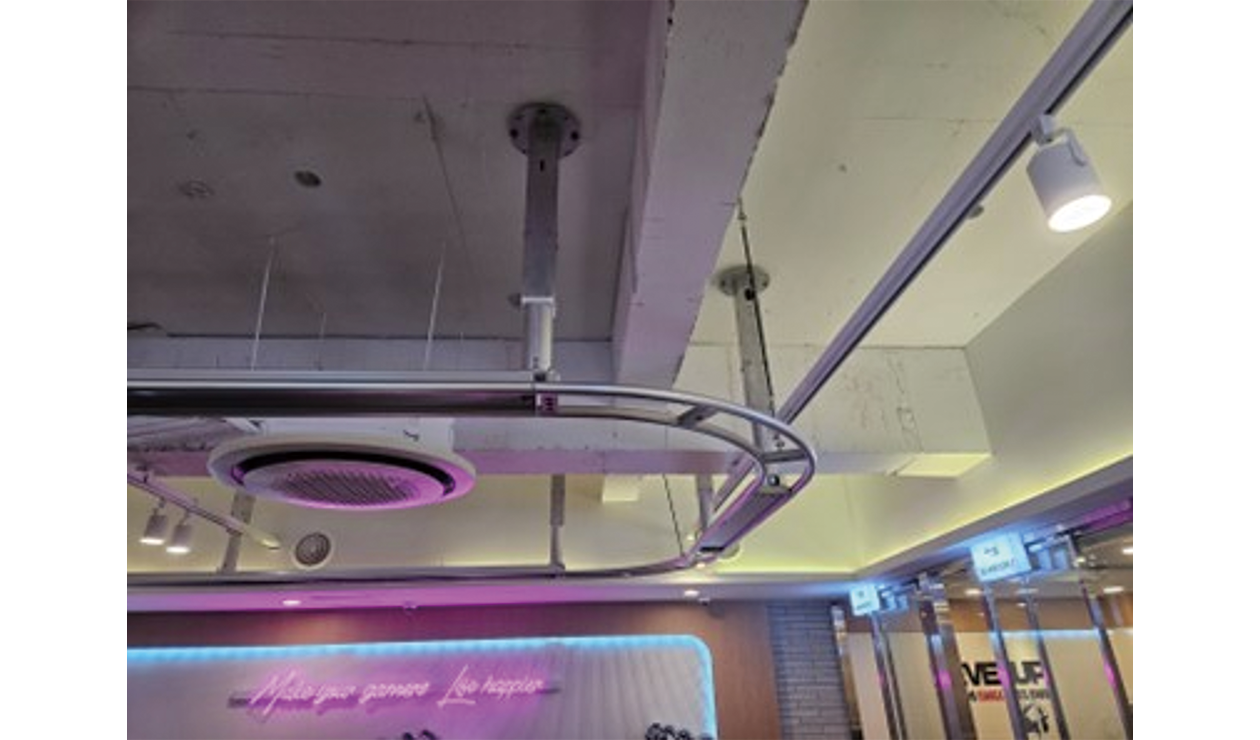
- Bumblebee’s rails are designed as a continuous network, not as isolated segments.
- Straight, curved, and loop sections are organically connected to form a unified mobility network.
- Diverter mechanisms enable route switching based on destination.
- Because movement does not rely on any single segment, the system provides dead-zone-free mobility paths.
- The network structure is flexibly configured to match the size and geometry of each space.
- As a result, the entire space operates as a single, integrated mobility infrastructure.
Point
"It is a mobility network that connects the entire space, beyond individual rail segments."
03
3. Space-to-Space Connectivity
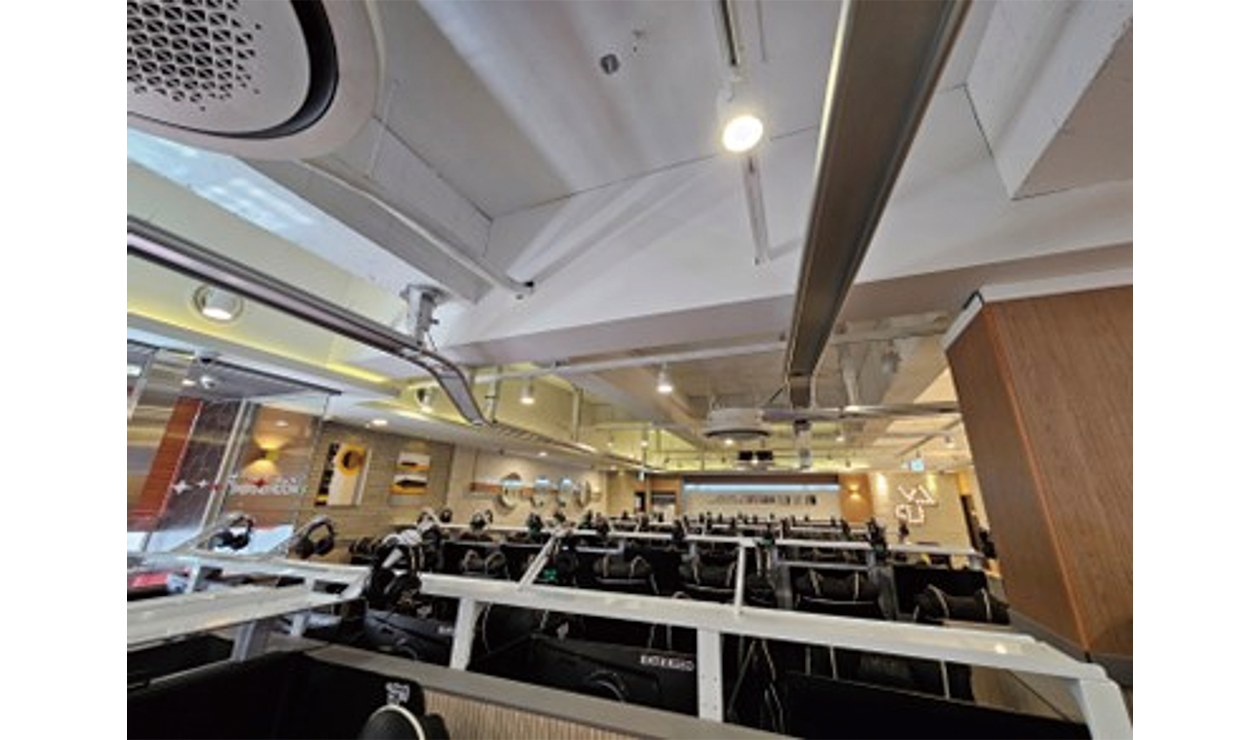
- The rail infrastructure is not confined to a single space.
- Access Gateways connect different spaces and zones into a unified system.
- With all spaces connected, no service blind spots occur.
- Each space can operate independently while still functioning as part of a single mobility network.
- Movement between spaces occurs continuously without requiring separate transition processes.
- New spaces can be added to the network as needed.
- This structure enables scaling beyond a single area to building-wide deployment.
Point
"It connects multiple spaces into a single mobility infrastructure."
04
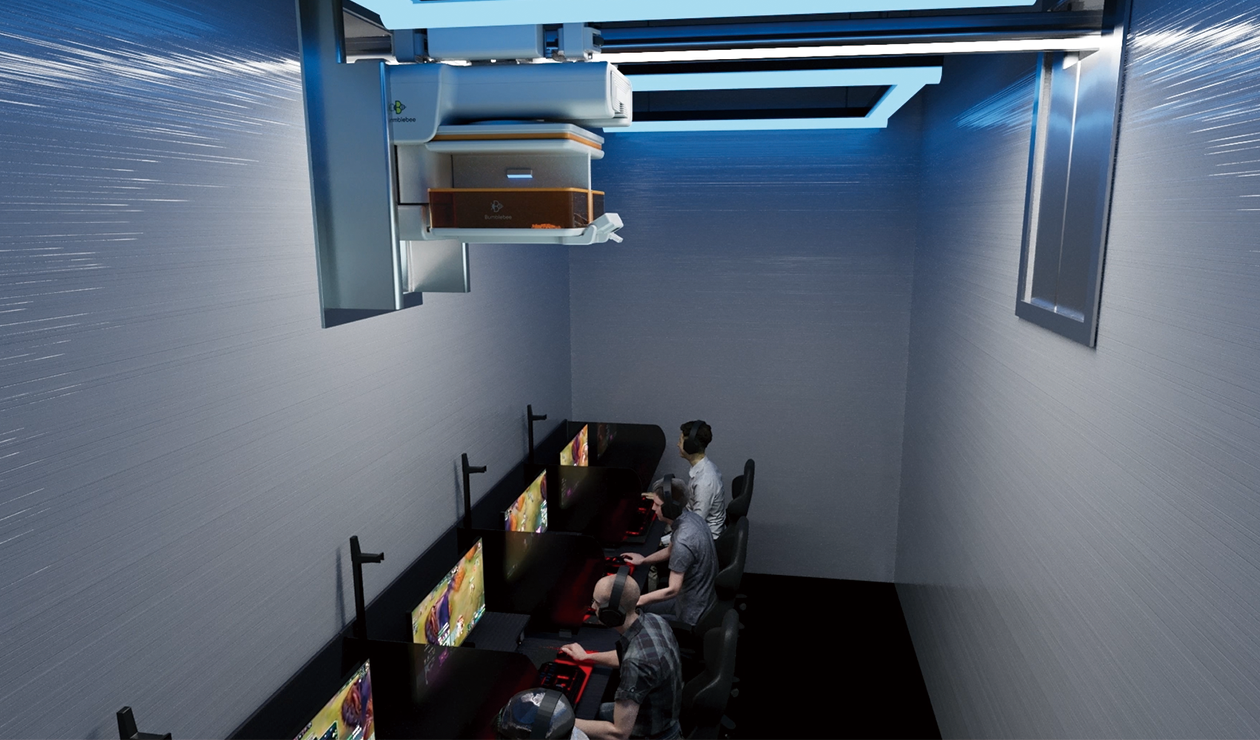
4. Compatibility with Building Infrastructure
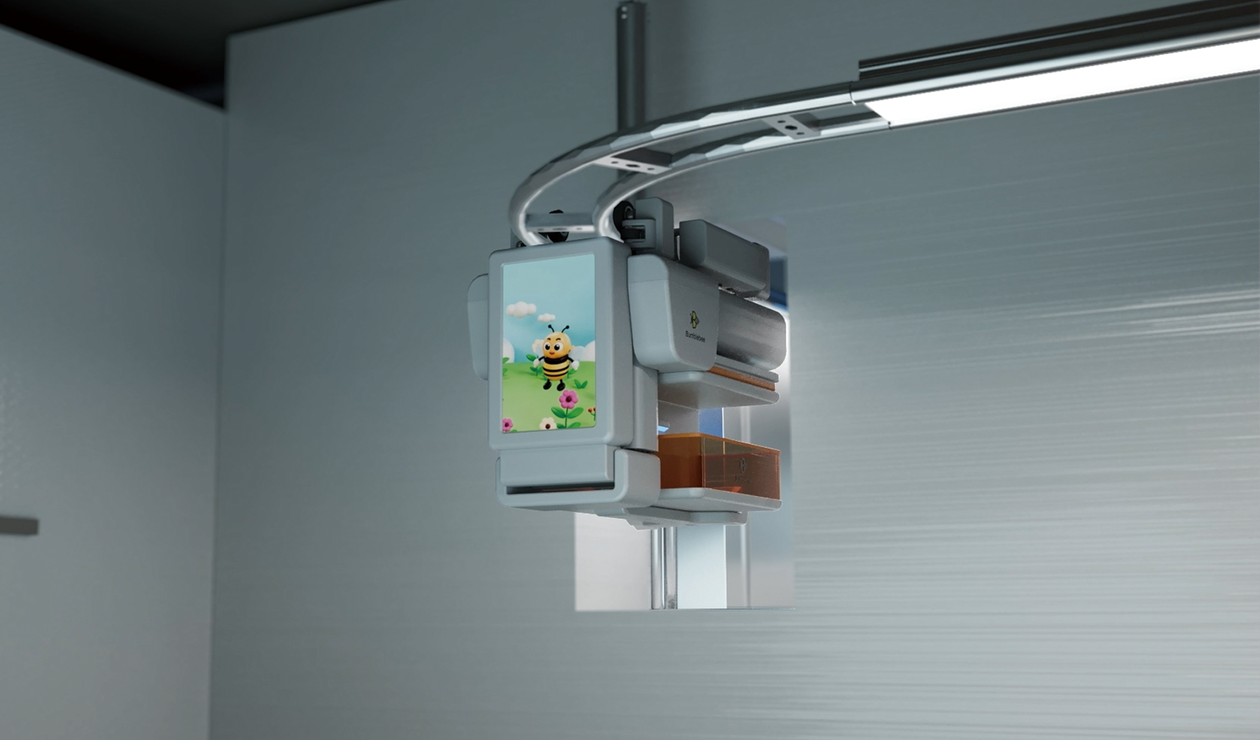
- The rail infrastructure is designed with existing building structures in mind.
- It can coexist in parallel with ceiling structures, facilities, piping, and ducts.
- It is not dependent on a specific construction method and can adapt to various types of spaces.
- Installation is possible without significantly altering the existing operating environment.
- Even if the building’s use or interior design changes, the infrastructure remains intact.
- This demonstrates that the rail infrastructure functions not as equipment, but as part of the building infrastructure.
Point
"It is an overhead mobility infrastructure designed to coexist seamlessly with existing building environments."
05
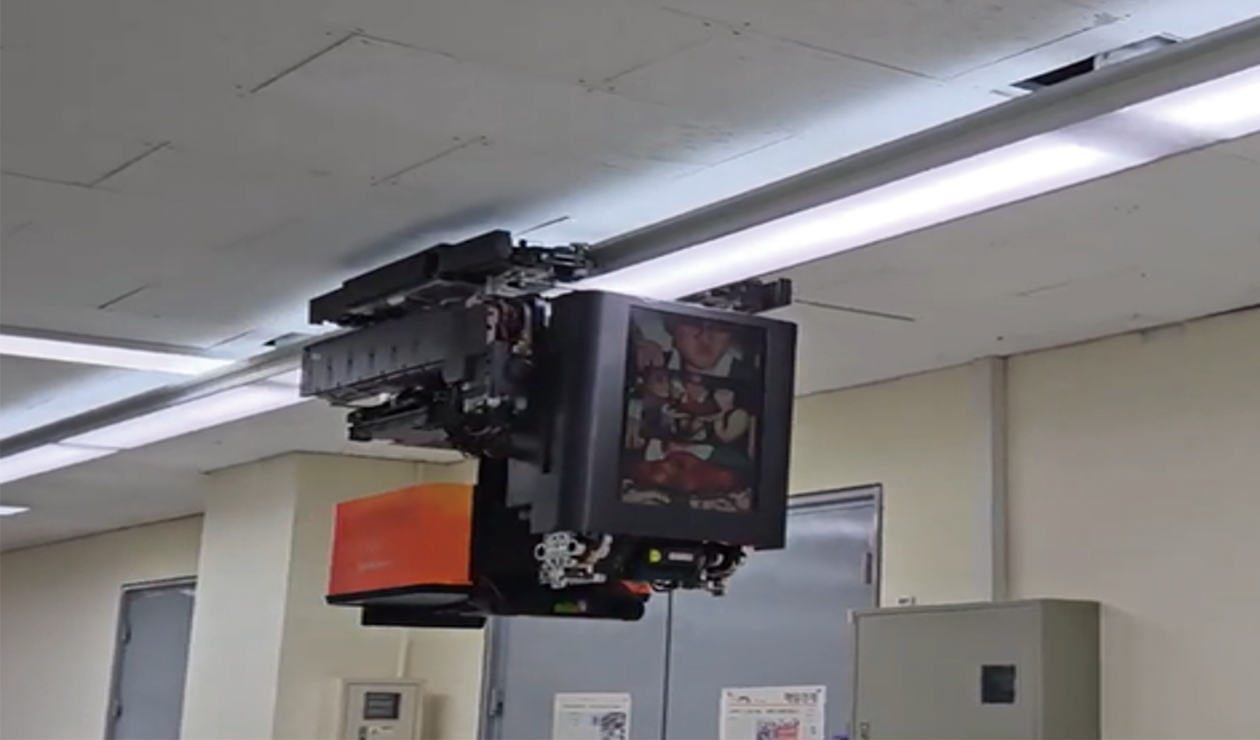
5. Lighting-Integrated Rail (Optional)
- The rail infrastructure can be optionally integrated with lighting systems as needed.
- This is not about adding lighting features, but about integrating existing ceiling infrastructure into a unified structure.
- By combining mobility infrastructure and lighting into a single system, ceiling elements are simplified.
- Visual exposure of the rails is minimized, allowing the system to blend naturally with interior design.
- Regardless of whether lighting integration is applied, the core mobility infrastructure remains unchanged.
- This enables an infrastructure configuration that balances functionality with spatial completeness.
Point
"An option that integrates mobility infrastructure and lighting into a single ceiling infrastructure."
06
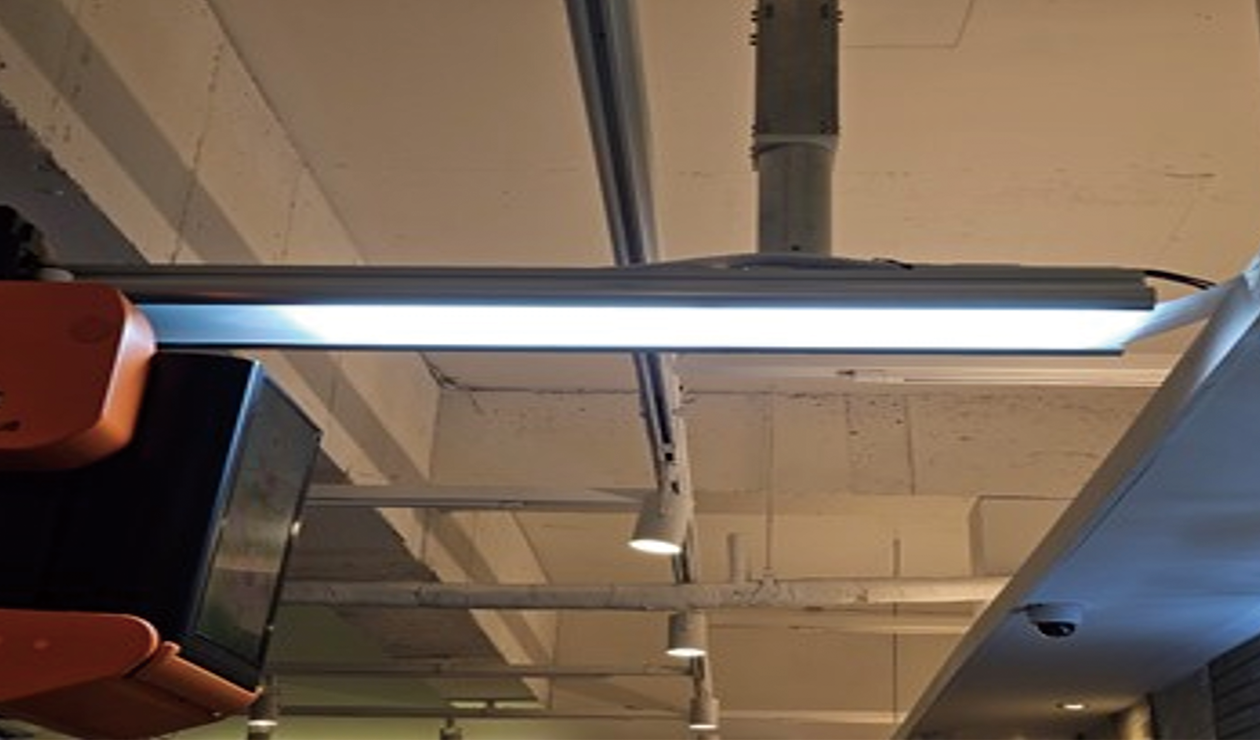
6. Modularity & Expandability
- The rail infrastructure is built on a modular design that supports phased installation.
- Required sections can be efficiently deployed first, based on on-site conditions.
- Installation can be carried out without complex construction processes, minimizing operational disruption.
- Even after initial deployment, additional installation and expansion are possible during operation.
- When spaces expand or layouts change, the entire infrastructure does not need to be replaced.
- Only the necessary sections can be added or reconfigured to respond flexibly to change.
- Bumblebee’s rail infrastructure is designed to make both adoption and expansion low-burden.
Point
"It is an infrastructure designed for phased deployment and continuous expansion."
07
7. Infrastructure as an Asset
- The rail infrastructure is not equipment designed for short-term use.
- Once deployed, it functions as a long-term, persistent infrastructure asset.
- Even when robots or task units change, the infrastructure itself remains unchanged.
- As use cases and applications expand, the value of the infrastructure increases accordingly.
- This represents an asset investment for platform operation, not a one-time installation cost.
- Bumblebee’s rail infrastructure is designed as a structure whose value accumulates over time.
Point
"It represents an infrastructure investment whose value accumulates over the long term, rather than a cost."