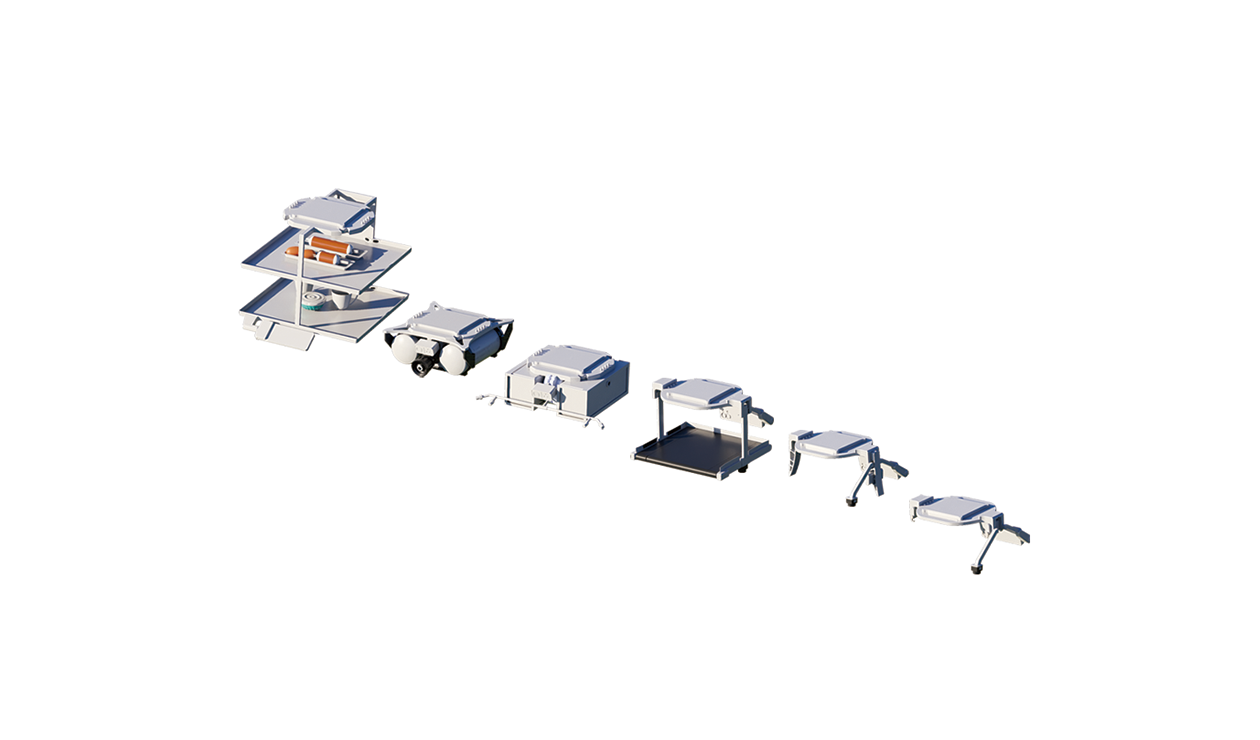
Overhead Mobility Architecture
01
1. Why Overhead
- The floor is already a congested space, occupied by people, furniture, and obstacles.
- Floor-based robots face structural limitations due to collisions, congestion, and frequent detours, making continuous and reliable movement difficult.
- Ceiling space is a three-dimensional area that remains largely unused and is physically separated from human movement.
- Bumblebee redefines this space as a new mobility infrastructure.
- By operating overhead, movement is completely separated from human traffic, enabling uninterrupted mobility even during peak hours.
- This transforms robots from auxiliary tools into core operational infrastructure.
Point
"The ceiling is the last untapped mobility infrastructure."
02
2. Architecture Overview
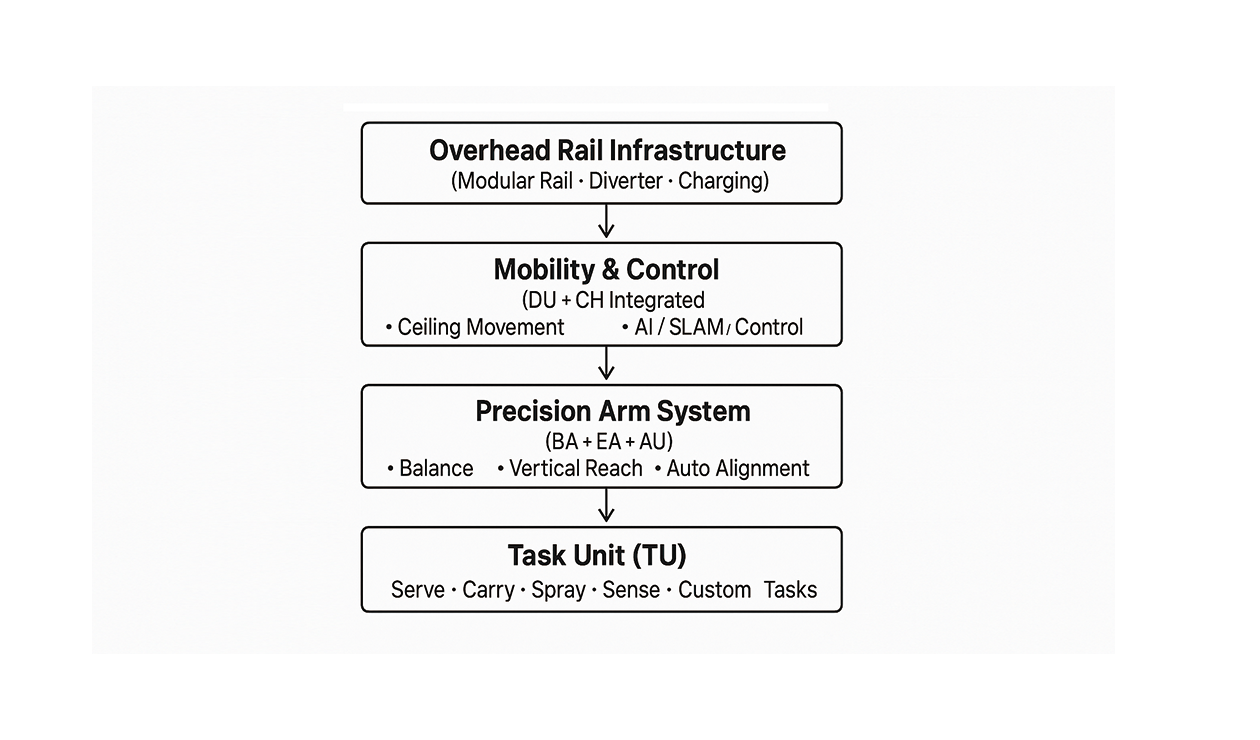
- Bumblebee is not a single robot, but a system architecture.
- It is designed with a clear separation of mobility, control, and task execution.
- The overhead mobility infrastructure functions as the platform’s foundational layer.
- On top of this, the control and AI layer enables autonomous movement and operational stability.
- Tasks are extended through standardized interfaces and modular task units.
- This architecture allows multiple applications to run on a single platform.
- While solutions may change, the architecture remains constant.
Point
"Bumblebee is not a robot built for a specific task, but an overhead mobility infrastructure architecture on which multiple tasks can be deployed."
03
3. Overhead Mobility Core
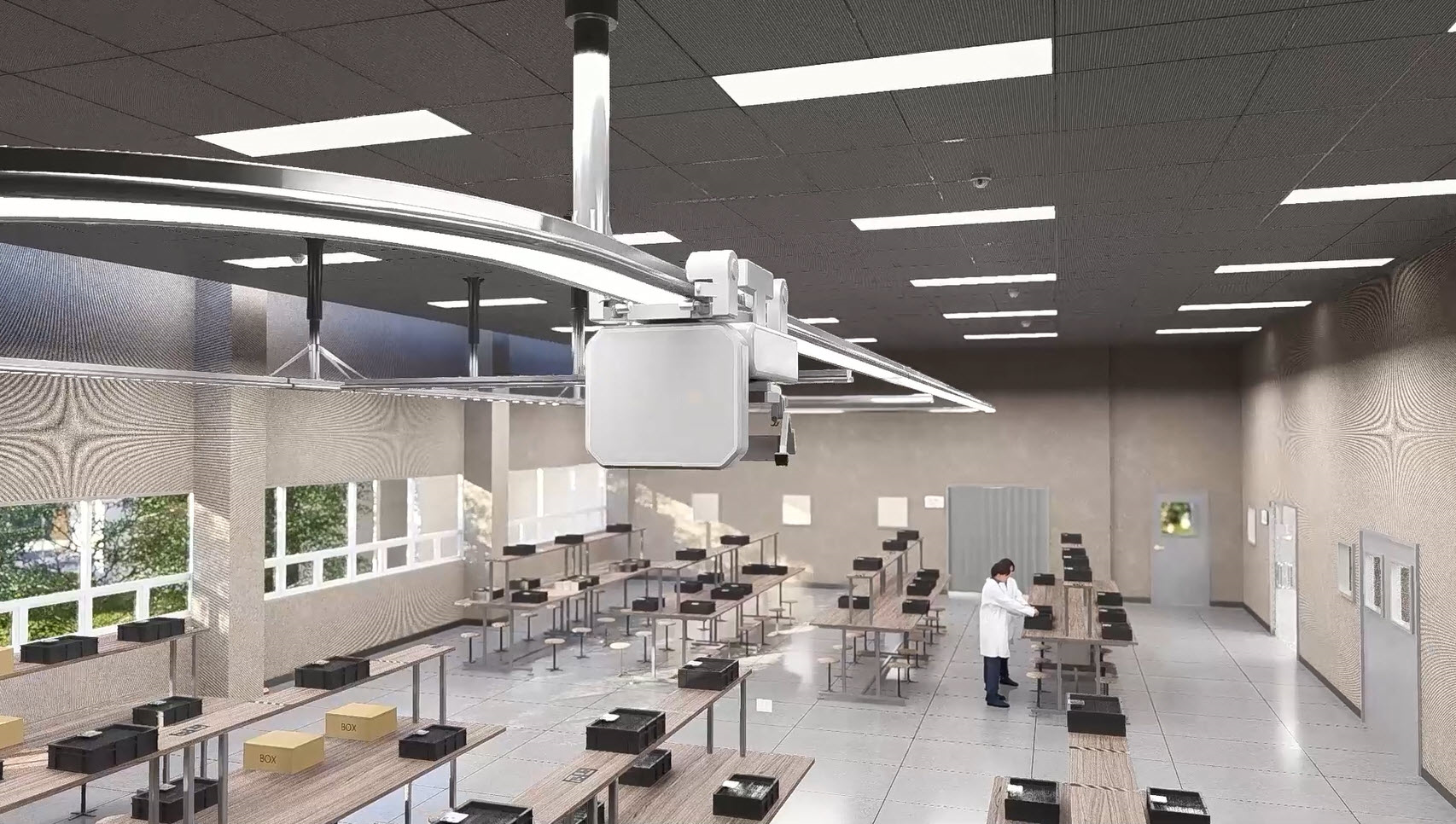
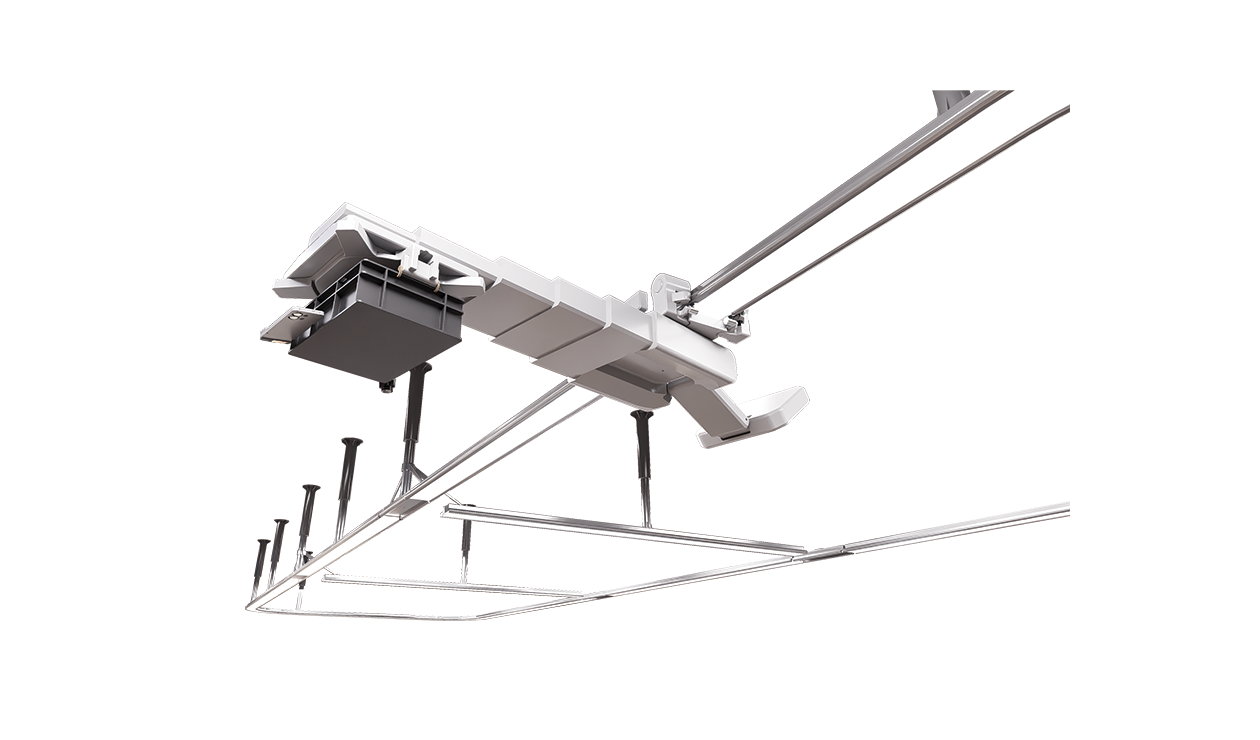
- Bumblebee moves along an overhead rail-based network.
- The rail is not merely a guide, but a path infrastructure designed for continuous mobility.
- Diverter mechanisms enable flexible route switching based on destination.
- Straight, curved, and looped rail segments organically connect the entire space.
- Access Gateways allow movement between different zones and spaces.
- The architecture supports not only intra-floor mobility but also scalable inter-floor movement.
- Movement remains continuous without stops or reconfiguration during operation.
- It is unaffected by changes in floor conditions or layout reconfiguration.
- This enables the entire building to operate as a single, continuous mobility infrastructure.
Point
"It transforms the entire ceiling space into a single, continuous mobility network."
04
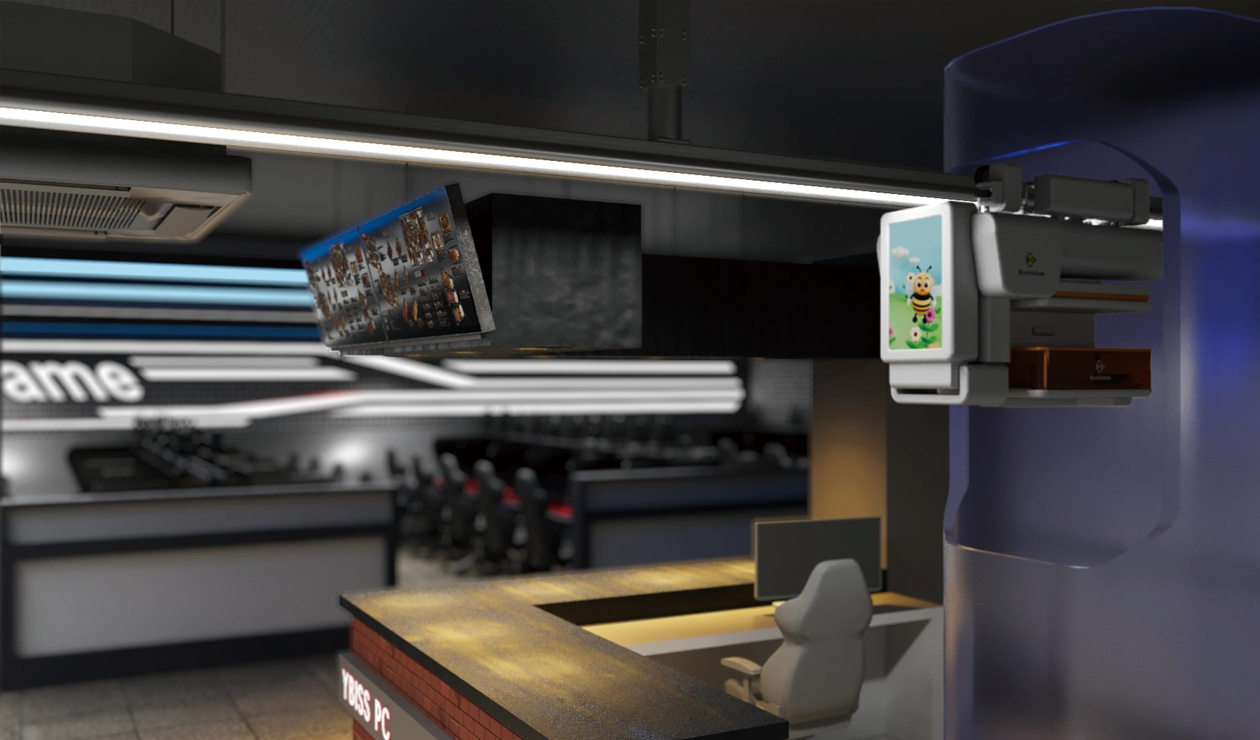
4. Spatial Coverage & Scalability
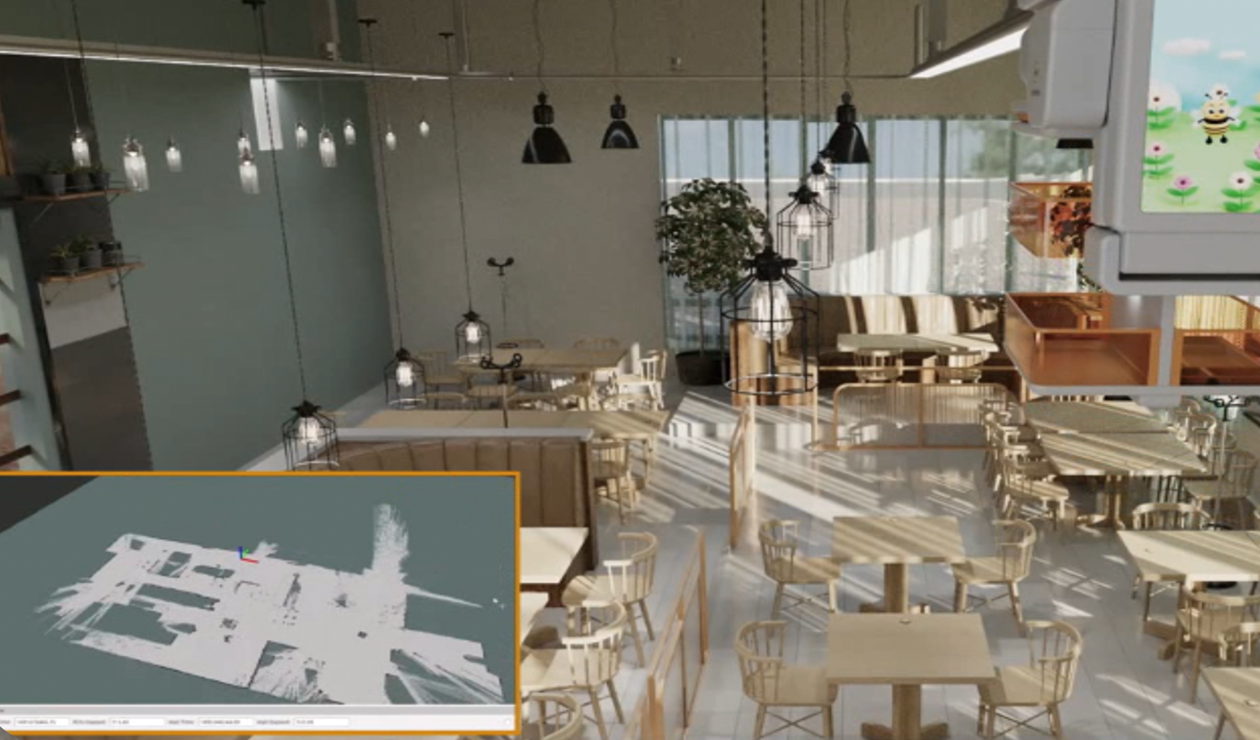
- Bumblebee’s overhead mobility infrastructure configures the entire space as a single network.
- It provides full coverage without dead zones, rather than being limited to specific areas.
- The system can start from a single zone and expand to additional spaces as needed.
- Multiple spaces are organically connected through Access Gateways.
- The core structure remains unchanged regardless of space size or geometry.
- Even when layouts change, the entire infrastructure does not need to be reinstalled.
- The architecture supports phased expansion through additional installation.
- Over time, it functions as a cumulative infrastructure whose scope of use continues to grow.
Point
"It demonstrates the potential of an infrastructure that starts in a single space and scales across the entire building."
05
5. Safety by Design
- Safety in Bumblebee is not an add-on feature, but an integral part of its architectural design.
- Potential risks during movement are addressed through protective structures that are considered in advance.
- Stable movement and posture control are naturally maintained throughout operation.
- Movement paths and system status are continuously monitored, enabling immediate response to abnormal conditions.
- When necessary, situations can be remotely checked and corrective actions can be taken.
- These safety responses are seamlessly embedded into the overall operating environment, without requiring additional manual intervention.
- Safety is managed at the infrastructure level, not as isolated device-level functions.
Point
"Multiple layers of protection and intelligent control structurally prevent risks during movement."
06
6. Infrastructure, Not a Robot
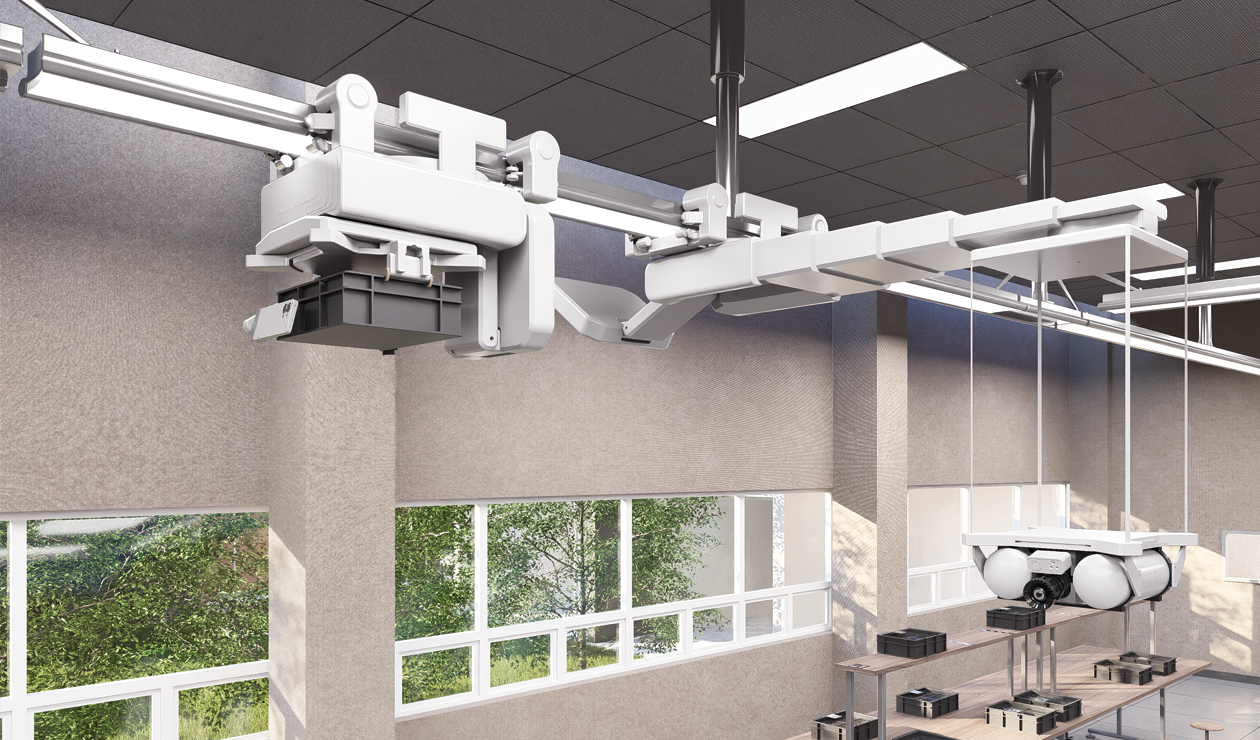
- Bumblebee is not a single robot designed to perform a specific task.
- It is a mobility infrastructure installed overhead and utilized continuously over time.
- Once deployed, multiple tasks and functions can be layered on top of the same infrastructure.
- Even when operational methods or use cases change, the infrastructure itself remains unchanged.
- This represents a shift from purchasing robots to building operational infrastructure.
- Bumblebee is a platform asset whose value accumulates over time.
Point
"Bumblebee is not a single-task robot, but an overhead mobility infrastructure platform."
07
7. Platform Ecosystem
- Bumblebee’s overhead mobility infrastructure serves as a foundation that accommodates multiple components.
- On a standardized structure, task units, control & AI, and interfaces are organically integrated.
- Functions can be added or modified as needed, while the infrastructure itself remains unchanged.
- A single platform can adapt to multiple industries and environments.
- New tasks and modes of use continue to expand on top of the platform.
- Bumblebee is not a collection of isolated features, but a scalable ecosystem architecture.
Point
"It is a structure where functions and applications continue to expand on a single infrastructure."